
Reconciliation & Indigenous Engagement
Our Acknowledgement
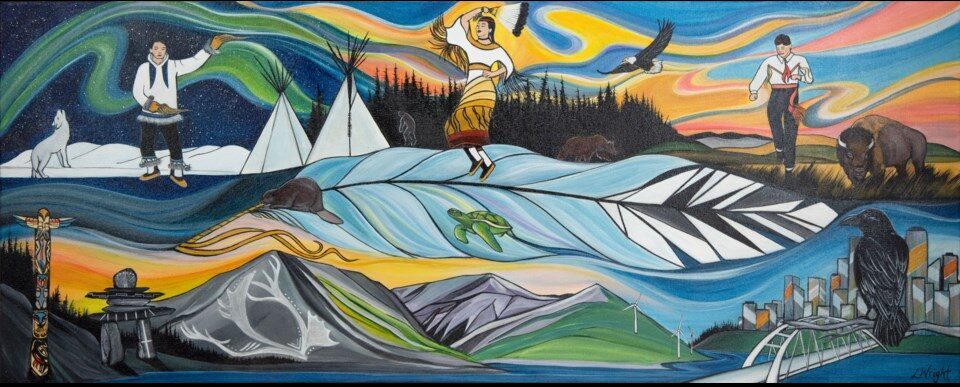
AAISA is committed to reconciliation. Our commitment starts with acknowledging our honour and privilege to live and work within the Treaty 7 territory. We acknowledge the traditional and ancestral territory and oral practices of the Blackfoot Confederacy, which includes the Siksika Nation, the North and South Piikani Nations and the Kainai Nation.
We also acknowledge the other members of Treaty 7 First Nations, the Tsuut’ina and Ĩyãħé Nakoda (Stoney Nakoda) which include Chiniki, Bearspaw and Wesley First Nations. In addition, the City of Calgary is home to the Métis Nation of Alberta (Region 3).
In everything we do, AAISA strives to create a space for reconciliation and inclusion. We are committed to ongoing learning, supporting Indigenous led initiatives, and working collaboratively to build equitable futures for all peoples who call Alberta home.
Notre Reconnaissance
AAISA s’engage à la réconciliation. Cet engagement commence en reconnaissant l’honneur et le privilège que nous avons de vivre et de travailler sur le territoire du Traité no 7. Nous reconnaissons le territoire traditionnel et ancestral et les pratiques orales de la Confédération des Pieds-Noirs, qui comprend la Nation Siksika, les Nations Piikani du Nord et du Sud et la Nation Kainai.
Nous reconnaissons également les autres membres des Premières Nations, les Tsuut’ina et les Ĩyãħé Nakoda (Stoney Nakoda), soit les Premières Nations Chiniki, Bearspaw et Wesley. De plus, la ville de Calgary abrite la Nation métisse de l’Alberta (Région 3).
Dans tout ce que nous faisons, l’AAISA s’efforce de créer un espace de réconciliation et d’inclusion. Nous nous engageons dans un apprentissage continu, soutenant les initiatives autochtones, et travaillant dans la collaboration pour construire un avenir équitable pour tous les peuples qui considèrent l’Alberta comme leur chez soi.
Learning Tools & Resources
Explore a curated collection of Indigenous and newcomer-focused resources designed to support learning, relationship-building, and meaningful action toward truth and reconciliation. From directories of Indigenous-led organizations across Alberta to AAISA’s Anti-Racism Blueprint for organizational change, these tools can be utilized to deepen understanding, strengthen community connections, and advance equitable practices.
Outils et Ressources Pédagogiques
Explorez une sélection de ressources destinées aux Autochtones et aux nouveaux arrivants, conçues pour favoriser l’apprentissage, le développement des relations et des actions significatives vers la vérité et la réconciliation. À partir de répertoires d’organisations dirigées par des Autochtones en Alberta jusqu’au Plan d’action lutte contre le racisme de l’AAISA pour le changement organisationnel, ces outils peuvent servir à approfondir la compréhension, à renforcer les liens communautaires et à promouvoir des pratiques équitables.
Indigenous Rights, Land Acknowledgements, & Newcomer Relations
AAISA is committed to advancing truth and reconciliation by supporting learning, dialogue, and meaningful relationships between Indigenous and newcomer communities.
Explore key resources on Indigenous rights, land acknowledgements, and newcomer sector learning for reconciliation.
If you have any resources to add please email us at research@aaisa.ca
L’AAISA s’engage à la vérité et la réconciliation en soutenant l’apprentissage, le dialogue et els relations significatives entre les communautés autochtones et les nouveaux arrivants
Explorez les ressources clés sur les droits des Autochtones, les reconnaissances territoriales et l’apprentissage du secteur des nouveaux arrivants en vue de la réconciliation.
Si vous avez des ressources à ajouter, veuillez envoyer un courriel à research@aaisa.ca
Explore the Indigenous & Newcomer Resources HereAlberta based Indigenous Cultural Programs & Partnership Opportunities
This directory highlights Indigenous-led organizations, cultural centers and community initiatives across Alberta including in Calgary, Edmonton, Red Deer, and province-wide that offer cultural programming, community services, youth support, and opportunities for cross-cultural collaboration.
Ce répertoire souligne les organisations, les centres culturels et les initiatives communautaires dirigés par des Autochtones dans tout l’Alberta, notamment à Calgary, Edmonton, Red Deer et dans l’ensemble de la province, qui offrent des programmes culturels, des services communautaires, du soutien aux jeunes et des possibilités de collaboration interculturelle.
Find Cultural Events and Indigenous Organization in Alberta HereThe Anti-Racism Blueprint: Action Planning Toolkit for Organizations
AAISA’s Anti-Racism Blueprint is a practical action-planning resource designed to support newcomer-serving organizations in advancing equity and addressing systemic racism. It includes tools, frameworks, and checklists aligned with national standards to move from commitment to sustainable action.
Le Plan d’action lutte contre le racisme de l’AAISA est un outil pratique de planification d’actions conçu pour aider les organismes au service des nouveaux arrivants à promouvoir l’équité et à lutter contre le racisme systémique. Il comprend des outils, des cadres et des listes de vérification conformes aux normes nationales pour passer de l’engagement à des actions durables.
Explore the Anti-Racism Planning Toolkit HereWalking Together Series
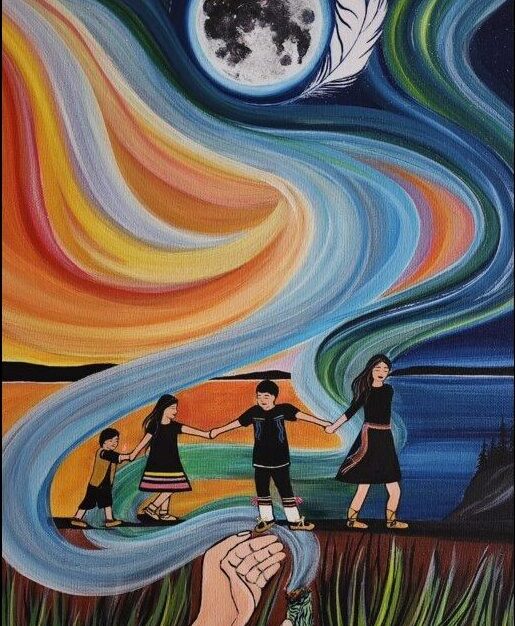 AAISA aims to strengthen its reconciliation efforts by building stronger connections between newcomer-serving organizations and Indigenous communities across Alberta.
These relationships are especially vital in the face of growing systemic inequities, public discourse challenges, and limited sector capacity.
Through the Walking Together series, AAISA aims to:
1. Foster collaboration between communities
2. Create intentional, non-tokenistic dialogue
3. Support ongoing relational and reconciliation-based work
AAISA vise à renforcer ses efforts de réconciliation en établissant des liens plus étroits entre les organismes au service des nouveaux arrivants et les communautés autochtones partout en Alberta.
Ces relations sont particulièrement essentielles face aux inégalités systémiques croissantes, aux défis du discours public et aux capacités limitées du secteur.
À travers la série Marcher ensemble, AAISA vise à :
1. Favoriser la collaboration entre les communautés
2. Instaurer un dialogue sincère et constructif
3. Soutenir le travail continu basé sur les relations et la réconciliation
Session 1: Deepening Dialogue, Solidarity, & Shared Stories (Nov 12, 2025)
On November 12, 2025, AAISA in collaboration with three indigenous speakers hosted the first Walking Together: Indigenous Truth & Reconciliation & the Newcomer Sector Session.
The session focused on building Solidarity through shared stories, reflection, and deeper understanding of Indigenous knowledge and experiences. Speakers highlighted the importance of truth-telling, cultural protocols, and long-term relationship building based on respect and reciprocity. Participants explored how newcomer-serving organizations can create culturally informed spaces, engage with Indigenous partners meaningfully, and support reconciliation through ongoing learning and collaboration.
Speakers
Anita Crowshoe
Senior Indigenous Engagement Advisor, Heritage Park | Member of Piikani Nation
acrshoe5@gmail.com
Anita blends traditional Blackfoot knowledge with western education, holding a B.Sc. in Elementary Education from the University of Montana Western. A cultural knowledge holder with transfers including the tipi design “Napi and the Buffalo” and rites to the Okan (Sundance), she is recognized for her leadership in reconciliation, cross-cultural learning, and relationship-building. Anita’s work strengthens community connections while upholding Piikani protocols and teachings. Survivors Circle, Piikani Nation, Heritage Park
Cheryl Whiskeyjack
Executive Director, Bent Arrow Traditional Healing Society
Cwhiskeyjack@bentarrow.ca
With over 25 years of leadership, Cheryl oversees programs supporting Indigenous families and youth in Edmonton. She holds the MacEwan Distinguished Alumni Award and an Honorary Doctor of Laws from the University of Alberta. Cheryl serves on multiple boards and advisory groups and is widely respected for her collaborative approach and commitment to Indigenous-led community impact. Bent Arrow Traditional Healing Society
Mari Jo Vanidour
Leadership Team, Stop Hate AB | Mohawk of the Grand River
MariJo.Vanidour@cssalberta.ca
Mari Jo brings 35+ years of experience across settlement, anti-racism, Indigenous services, and community development. A skilled facilitator and storyteller, she works to strengthen dialogue and reconciliation between Newcomers, Settlers, and Indigenous Peoples. Her leadership at Stop Hate AB is rooted in truth-telling, creative communication, and building equitable, inclusive communities. Stop Hate AB
Recording
Missed the event or want to revisit the session? Click below to access the event recording.
Session 1 Recording – Walking Together: Indigenous Truth & Reconciliation & the Newcomer Sector
We thank all our attendees, speakers, and partners for contributing to this important conversation and for helping build thriving, inclusive communities across the Alberta region.
On November 12, 2025, AAISA en collaboration avec trois conférenciers autochtones a organisé la première session de Marcher ensemble : Vérité et réconciliation autochtones et secteur des nouveaux arrivants.
La session visait à renforcer la Solidarité par le partage d’histoires, la réflexion et une meilleure compréhension des savoirs et des expériences autochtones. Les conférenciers ont souligné l’importance de dire la vérité, de respecter les protocoles culturels et de bâtir des relations durables fondées sur le respect et la réciprocité. Les participants ont exploré comment les organismes d’aide aux nouveaux arrivants peuvent créer des espaces adaptés aux réalités culturelles, collaborer de façon constructive avec les partenaires autochtones et soutenir la réconciliation par l’apprentissage et la collaboration continus.
Conférenciers
Anita Crowshoe,
Conseillère principale engagement autochtone, Heritage Park | Membre de la nation Piikani
acrshoe5@gmail.com
Anita combine le savoir traditionnel des Pieds-Noirs avec une formation occidentale. Titulaire d’un baccalauréat en éducation primaire de l’Université du Montana Western. Elle est un détenteur du savoir culturel transmis, notamment à travers le motif du tipi « Napi et le Bison » et les rites de la Danse du Soleil (Okan). Elle est reconnue pour son leadership en matière de réconciliation, d’apprentissage interculturel et de développement des relations. Le travail d’Anita renforce les liens communautaires tout en préservant les protocoles et les enseignements des Piikani. Survivors Circle, Piikani Nation, Heritage Park
Cheryl Whiskeyjack
Directrice générale, Bent Arrow Traditional Healing Society,
Cwhiskeyjack@bentarrow.ca
Avec plus de 25 ans d’expérience en leadership, Cheryl supervise des programmes de soutien aux familles et aux jeunes autochtones d’Edmonton. Elle est titulaire du prix MacEwan Distinguished Alumni Award et d’un doctorat honorifique en droit de l’Université de l’Alberta. Cheryl siège au sein de nombreux conseils d’administration et groupes consultatifs et est très respectée pour son approche collaborative et son engagement envers l’impact communautaire des initiatives autochtones. Bent Arrow Traditional Healing Society
Mari Jo Vanidour
Équipe de direction, Stop Hate AB | Mohawk of the Grand River
MariJo.Vanidour@cssalberta.ca
Mari Jo a plus de 35 ans d’expérience dans les domaines de l’établissement, de la lutte contre le racisme, des services aux Autochtones et du développement communautaire. Animatrice et conteuse hors pair, elle œuvre au renforcement du dialogue et de la réconciliation entre les nouveaux arrivants, les pionniers et les peuples autochtones. Son leadership chez Stop Hate AB repose sur la vérité, la communication créative et le développement de communautés équitables et inclusives. Stop Hate AB
Enregistrements
Vous avez manqué l’événement ou souhaitez revoir la session ? Cliquez ci-dessous pour accéder à l’enregistrement.
Nous remercions tous nos participants, conférenciers et partenaires d’avoir contribué à cette importante conversation et d’avoir aidé à développer des communautés dynamiques et inclusives dans tout l’Alberta.
Session 2: Upcoming In-Person 2026
Upcoming – Email us to participate at fkaleem@aaisa.ca or Join our Community of Practice list to get updates
À venir – Écrivez-nous à fkaleem@aaisa.ca pour participer ou inscrivez-vous à notre liste de diffusion « Communauté de pratique » pour recevoir les mises à jour.
Indigenous Awareness Group – FireSide Chats
AAISA’s Indigenous Awareness Group is an internal learning circle for AAISA staff, created to support ongoing education, reflection, and awareness around Indigenous histories, experiences, and perspectives. As well host FireSide Chat events in collaboration with the regions.
Groupe de sensibilisation aux questions autochtones – Discussions au coin du feu
Le Groupe de sensibilisation aux réalités autochtones de l’AAISA est un cercle d’apprentissage interne destiné au personnel de l’AAISA. Il a été créé pour soutenir la formation continue, la réflexion et la sensibilisation aux histoires, aux expériences et aux perspectives autochtones. On organise également des discussions informelles en collaboration avec les régions.
National Day for Truth and Reconciliation - Sep 30, 2025
In alignment with the National Day for Truth and Reconciliation on September 30, the group organized the PNT Fireside Chat as an opportunity for our team and our partners across the PNT region to deepen understanding, honor survivors, and strengthen our commitment to reconciliation in our work and relationships.
En lien avec la Journée nationale pour la vérité et la réconciliation du 30 septembre, le groupe a organisé la discussion informelle PNT afin d’offrir à notre équipe et à nos partenaires de la région PNT l’occasion d’approfondir leur compréhension, d’honorer les survivants et de renforcer notre engagement envers la réconciliation dans leur travail et leurs relations.
Click here to view the PNT Fire Side Chat SessionFrom Many Places to One Circle - Jan 26, 2026
From Many Places to One Circle
AAISA, in partnership with SAISIA and MANSO, hosted the Prairie and Northern Territories Indigenous Awareness Group Fireside Chat: From Many Places to One Circle—a virtual relational learning space bringing together Indigenous speakers, settlement sector practitioners, and community partners to deepen understanding, connection, and shared responsibility.
Speakers shared teachings, stories, and lived experiences focused on Indigenous wellness, cultural medicines, spirituality, community healing, and Indigenous–newcomer relationships within colonial systems. The session invited participants to reflect on Indigenous ways of knowing as a way of life, the impacts of colonization on identity and spirit, and the importance of remembering, relationship, and reciprocity as pathways toward reconciliation.
This Fireside Chat created space for listening, reflection, and dialogue, while encouraging participants to continue learning through provided resources and to carry these teachings into their personal, organizational, and community practices.
Speakers / Hosts – Contact Information
Several participants asked how to stay in touch with the speakers. With their permission, please find their contact information below:
Mari Jo Vanidour – Host | Indigenous Storyteller, Public Speaker, and Reconciliation Advocate (Mohawk of the Grand River, non-status) | Works across Settlement, Indigenous Services, and Community Development sectors
van.mj6@gmail.comJudy Pelly – Indigenous Wellness Educator & Cultural Advisor (Anishinaabe-Saulteaux, Cote First Nation, Treaty 4) | Cultural Advisor, Saskatchewan Health Authority – Mental Health & Addictions (Saskatchewan)
judypelly@gmail.comDebbie Parker – Community Support Worker, Portage la Prairie Friendship Centre (Anishinaabe ikwe, originally from Sandy Bay First Nation, MB) | Portage la Prairie, Manitoba
mukweikwe1@gmail.comJeanna Anthony – Community Worker, Portage la Prairie Friendship Centre (Anishinaabe ikwe, Sandy Bay First Nation) | Portage la Prairie, Manitoba
jeannaward72@gmail.com- Melissa Monzon – Community Engagement & Program Coordinator, Four Directions Department, Red Deer Native Friendship Society | Red Deer, Alberta (Originally from Lima, Peru)
melissa@rdnfs.com
During the chat, several excellent resource recommendations were shared. These can serve as a great starting point for to learn about the history and culture of Indigenous peoples in Canada:
- Ally is a Verb – Rose LeMay Strong book recommendation by host as it explores different ways to enter community and build meaningful connection. The book offers practical guidance on allyship, understanding true history, responding to racism, and supporting equity and inclusion in workplaces and communities very relevant in newcomer sector work.
- Ancestral Mathematics To be born you needed 2 parents, 4 grandparents, 8 great-grandparents, and so on—honouring all the struggles, love, resilience, and choices that make each of us possible. This reflection invites consideration of how many lives and stories came together for us to be here today, and what responsibilities we carry because of that. Powerful prompt for self-reflection on gratitude, interconnectedness, and how we show up for others and future generations.
- Traditional Métis Medicines and Healing – Lawrence J. Barkwell Tobacco (offerings), Sweetgrass, Sage
- Trick or Treaty? by Alanis Obomsawin. Succinctly and powerfully portrays one community’s attempts to enforce their treaty rights and protect their lands, while also revealing the complexities of contemporary treaty agreements.
- 2018 Parliament | Jim Dumont Addresses the Indigenous Peoples’ Assembly Creation Story. Mari Jo shared an origin teaching about how Indigenous peoples were created carrying all the colours of the Earth, symbolizing a unique and enduring spiritual connection to the Creator and to all of creation. She reflected on how this connection was targeted through colonization, and how healing today is about remembering that spiritual power and supporting our brothers and sisters in finding the way back home.
De plusieurs lieux à un seul cercle
L’AAISA, en partenariat avec SAISIA et MANSO, a organisé la discussion informelle du Groupe de sensibilisation autochtone des Prairies et des Territoires du Nord : De plusieurs lieux à un seul cercle — un espace d’apprentissage relationnel virtuel réunissant des conférenciers autochtones, des praticiens du secteur de l’établissement et des partenaires communautaires afin d’approfondir la compréhension, la connexion et la responsabilité partagée.
Les conférenciers ont partagé des enseignements, des histoires et des expériences vécues axés sur le bien-être autochtone, les médecines culturelles, la spiritualité, la guérison communautaire et les relations entre Autochtones et nouveaux arrivants dans le contexte des systèmes coloniaux. La session invitait les participants à réfléchir aux savoirs autochtones comme mode de vie, aux répercussions de la colonisation sur l’identité et la spiritualité, ainsi qu’à l’importance du souvenir, des relations et de la réciprocité comme voies vers la réconciliation.
Cette discussion informelle a créé un espace d’écoute, de réflexion et de dialogue, tout en encourageant les participants à poursuivre leur apprentissage grâce aux ressources fournies et à intégrer ces enseignements dans leurs pratiques personnelles, organisationnelles et communautaires.
Conférenciers / Hôtes – Coordonnées
Plusieurs participants ont demandé comment rester en contact avec les conférenciers. Avec leur permission, veuillez trouver leurs coordonnées ci-dessous :
- Mari Jo Vanidour – Animatrice | Conteuse autochtone, conférencière et militante pour la réconciliation (Mohawk de la rivière Grand, sans statut) | Travaille dans les secteurs de l’établissement, des services aux Autochtones et du développement communautaire
van.mj6@gmail.com - Judy Pelly – Éducatrice en bien-être autochtone et conseillère culturelle (Anishinaabe-Saulteaux, Première Nation de Cote, Traité n° 4) | Conseillère culturelle, Régie de la santé de la Saskatchewan – Santé mentale et toxicomanie (Saskatchewan)
judypelly@gmail.com - Debbie Parker – Intervenante communautaire, Centre d’amitié de Portage la Prairie (Anishinaabe ikwe, originaire de la Première Nation de Sandy Bay, Manitoba) | Portage la Prairie, Manitoba
mukweikwe1@gmail.com - Jeanna Anthony – Intervenante communautaire, Centre d’amitié de Portage la Prairie (Anishinaabe ikwe, Première Nation de Sandy Bay) | Portage la Prairie, Manitoba
jeannaward72@gmail.com
- Melissa Monzon – Coordonnatrice de l’engagement communautaire et des programmes, Département des Quatre Directions, Société d’amitié autochtone de Red Deer | Red Deer, Alberta (Originaire de Lima, Pérou)
melissa@rdnfs.com
Au cours de la discussion, plusieurs excellentes ressources ont été recommandées. Elles constituent un excellent point de départ pour découvrir l’histoire et la culture des peuples autochtones du Canada :
Lectures et réflexions
- Ally is a Verb – Rose LeMay (en anglais) un ouvrage fortement recommandé par l’hôte, qui explore différentes façons de s’intégrer à une communauté et de tisser des liens significatifs. Ce livre offre des conseils pratiques sur les alliances, la compréhension de l’histoire, la lutte contre le racisme et le soutien à l’équité et à l’inclusion en milieu de travail et au sein des communautés, des sujets particulièrement pertinents pour le travail auprès des nouveaux arrivants.
- L’ histoire des ancêtres : (en anglais) Pour naître, il a fallu deux parents, quatre grands-parents, huit arrière-grands-parents, et ainsi de suite – honorant toutes les épreuves, l’amour, la résilience et les choix qui ont rendu chacun de nous possible. Cette réflexion invite à considérer combien de vies et d’histoires se sont conjuguées pour que nous soyons là aujourd’hui, et quelles responsabilités nous en portons. Un puissant appel à l’introspection sur la gratitude, l’interdépendance et notre engagement envers les autres et les générations futures.
- Médecines et soins traditionnels métis – Lawrence J. Barkwell (en anglais) Tabac (offrandes), foin d’odeur, sauge
Ressources vidéo
- « Trick or Treaty ? » d’Alanis Obomsawin .(en anglais) Ce livre dépeint avec précision et force les efforts d’une communauté pour faire respecter ses droits issus des traités et protéger ses terres, tout en révélant la complexité des accords de traités contemporains.
- Parlement 2018 | Jim Dumont s’adresse à l’Assemblée des peuples autochtones : (en anglais) récit de la création. Mari Jo a partagé un enseignement sur les origines, expliquant comment les peuples autochtones ont été créés porteurs de toutes les couleurs de la Terre, symbolisant un lien spirituel unique et durable avec le Créateur et toute la création. Elle a évoqué comment ce lien a été ciblé par la colonisation et comment la guérison aujourd’hui passe par le souvenir de cette force spirituelle et le soutien apporté à nos frères et sœurs pour retrouver le chemin de leur foyer.
Nous espérons que ces ressources vont vous aider dans votre apprentissage continu et vos réflexions. Veuillez vous inscrire pour Communité de practique pour les événements à venir. L’enregistrement de cet événement est maintenant disponible ci-dessous :