
Understanding Bill C‑12: What Settlement and Newcomer‑Serving Organizations Need to Know
Why This Matters?
Bill C‑12, the Strengthening Canada’s Immigration System and Borders Act, introduces significant changes to Canada’s refugee determination system. The legislation creates new eligibility restrictions, expands the use of administrative screening processes, and changes how certain refugee claims access hearings and appeal mechanisms. For settlement and newcomer‑serving organisations, these changes have practical implications for claimant pathways, legal referrals, and service delivery. Understanding how the legislation operates in practice will be important as implementation continues and its longer‑term impacts begin to emerge.
This article provides an overview of the legislation, key implementation considerations, and areas to monitor moving forward.
Download the full report (PDF)
What the Legislation Does
Bill C‑12 is presented by the federal government as strengthening Canada’s immigration and asylum systems in four key areas:
- New eligibility requirements for asylum claims: Certain refugee claims will no longer be referred to the Immigration and Refugee Board (IRB). This includes claims submitted more than one year after an individual’s first entry to Canada after June 24, 2020, and certain claims made more than 14 days after irregular entry from the United States.
- A modernised asylum process: The legislation introduces changes intended to streamline how asylum claims are received, processed, and referred. These include changes to application procedures, claim referrals, inactive case management, voluntary departures, and claimant processing requirements.
- Domestic information sharing: Bill C‑12 creates new authorities that allow Immigration, Refugees and Citizenship Canada (IRCC) to share information more broadly with provincial, territorial, and federal partners under prescribed agreements and safeguards.
- Immigration document and application authorities: The legislation provides the federal government with expanded powers to suspend, refuse, pause, or modify immigration documents and application processing in defined public‑interest circumstances.
Together, these changes affect who can access refugee determination processes, how claims move through the system, and how information and immigration authorities are exercised across government.
How the Refugee System Previously Worked
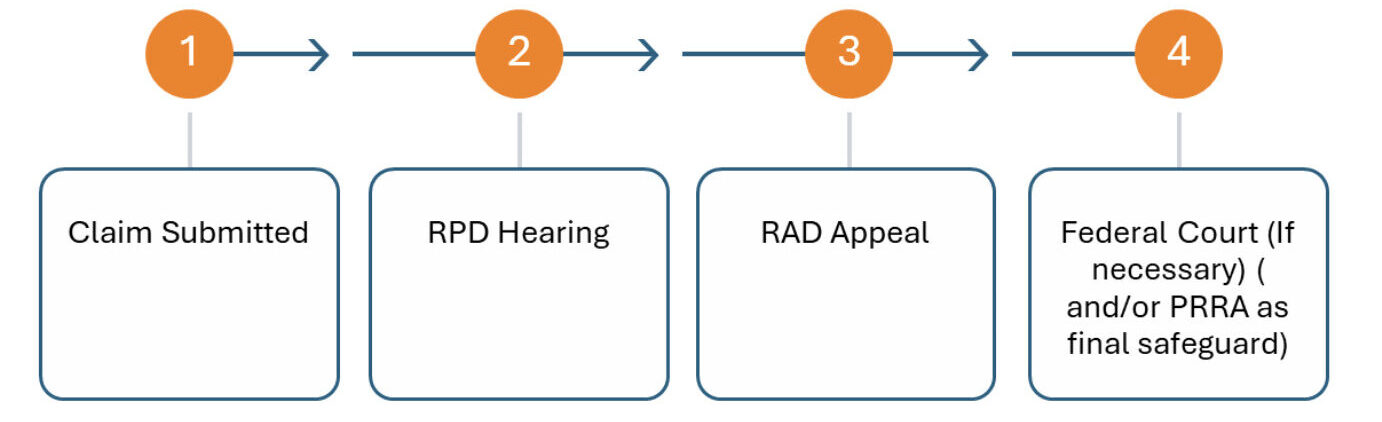
Prior to Bill C‑12, refugee claims generally moved through a multi‑stage adjudicative process within the Immigration and Refugee Board (IRB), which functions as an independent tribunal responsible for adjudicating refugee claims, whereas Immigration, Refugees and Citizenship Canada (IRCC) is responsible for immigration policy, program administration, and system management. Claims were first assessed through oral hearings at the Refugee Protection Division (RPD). Refused claims could then be reviewed through the Refugee Appeal Division (RAD). Together, these mechanisms provided opportunities for independent decision making and internal error correction before cases proceeded to Federal Court (FC). While the Pre‑Removal Risk Assessment (PRRA) process – conducted by IRCC – functioned separately as a final administrative safeguard and was not designed to replace the broader adjudicative process within the IRB.
Before Bill C‑12
After Bill C‑12 (Affected Claimants)
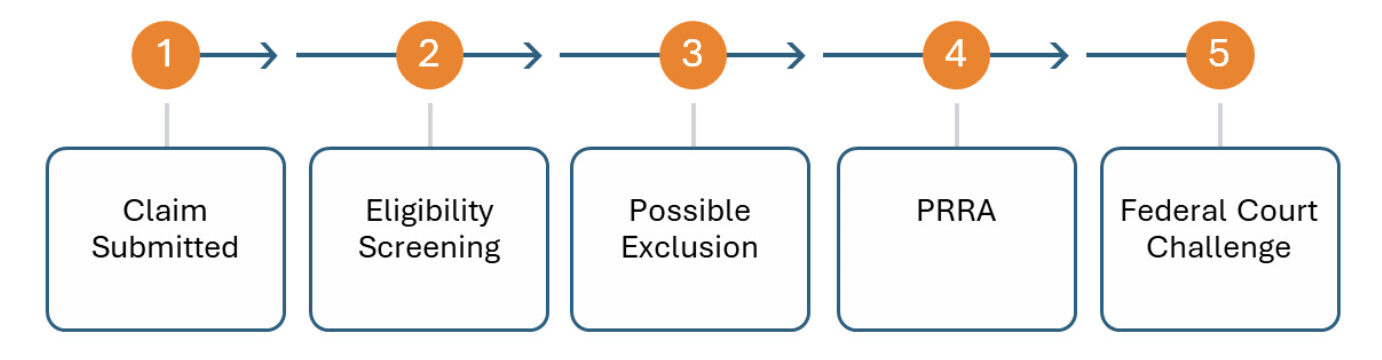
While Bill C‑12 is presented through four broad policy changes, several of these measures have practical implications for how refugee claims move through Canada’s protection system. In particular, the new eligibility requirements and asylum processing reforms may reduce the number of claims that proceed through traditional hearing and appeal pathways, increasing reliance on administrative processes for affected claimants.
What Changes in Practice
Bill C‑12 changes how many refugee claims access this adjudicative framework. Under the previous system, claims generally proceeded through hearings and internal appeals before judicial review was considered. Under Bill C‑12, certain claims are screened out before reaching either the Refugee Protection Division or Refugee Appeal Division. For affected claimants, administrative screening processes such as PRRA now replace hearing and appeal pathways that previously existed. This represents a significant shift from adjudication toward earlier forms of procedural screening.
Why the Government Introduced Bill C‑12
Bill C‑12 was introduced during a period of increasing refugee claim volumes, processing pressures, and growing concern regarding the capacity of Canada’s refugee determination system. As claim inventories expanded and backlogs persisted, the federal government argued that structural changes were needed to improve system performance and maintain confidence in the refugee determination process.
Government communications describe the legislation as a means of improving efficiency, strengthening system integrity, and maintaining fairness in refugee processing. The government further maintains that these objectives can be achieved while remaining consistent with Canada’s constitutional, legal, and international obligations.
What Remains Unclear
Several aspects of Bill C‑12 remain unclear as implementation continues. While elements of the legislation are already being operationalised, many of the procedures governing how claims will be processed in practice continue to develop. As a result, there is still limited clarity regarding how eligibility decisions will be applied, how claimants will move through administrative screening pathways, and how affected individuals will be notified and supported throughout the process.
Questions also remain regarding the practical operation of the Pre‑Removal Risk Assessment (PRRA) process under increased demand. It is unclear how rising referral volumes may affect processing times, claimant outcomes, and the overall capacity of the system. The extent to which these changes will increase Federal Court activity and judicial review applications is similarly uncertain.
Further uncertainty exists around procedural fairness and due process. Legal and policy debates continue regarding how new eligibility restrictions will interact with Charter protections and whether affected claimants will retain meaningful opportunities to have their claims heard before removal decisions are pursued.
For settlement and newcomer‑serving organisations, the lack of operational clarity creates practical challenges. Frontline staff may encounter clients affected by new eligibility restrictions without clear guidance regarding timelines, referral pathways, legal options, or appropriate supports. As implementation continues, experiences on the ground will provide important insight into how these changes function in practice and whether unintended impacts begin to emerge.
Who Is Most Affected?
Refugee Claimants
Refugee claimants subject to the new eligibility restrictions are the population most directly affected by Bill C‑12. Individuals who submit a claim more than one year after first entering Canada, or who do not meet new filing timelines following irregular entry from the United States, may no longer access the same hearing and appeal processes that previously existed. For these individuals, eligibility may be determined before their protection needs and risk factors are substantively assessed. This is particularly significant for people whose circumstances have changed after prior lawful presence in Canada, including those who may have become vulnerable as conditions deteriorated in their country of origin.
Settlement and Newcomer‑Serving Organisations
Settlement and newcomer‑serving organisations are likely to experience the operational impacts of Bill C‑12 early and directly. Frontline staff working in housing, language services, employment supports, and case management may encounter increasing numbers of clients navigating PRRA processes, removal proceedings, or complex eligibility questions that did not previously arise as frequently. These changes may increase the need for legal referrals, stronger coordination with immigration lawyers, and greater staff familiarity with refugee determination pathways. Organisations serving refugee communities may also face growing demand for support from individuals who remain in Canada but are no longer progressing through traditional refugee protection processes.
Legal Service Providers
Legal service providers may experience increased pressure as disputes shift away from internal review mechanisms and toward judicial processes. Under the previous system, the Refugee Appeal Division provided an opportunity to correct errors within the Immigration and Refugee Board before Federal Court intervention was required. Where claimants no longer access the RPD or RAD, challenges may increasingly focus on eligibility decisions, PRRA outcomes, judicial reviews, and stay applications intended to prevent removal. This may increase demand on legal aid providers, refugee lawyers, and community legal organisations while further contributing to pressure on Federal Court resources.
What to Watch For
Several indicators will provide early evidence of how Bill C‑12 is functioning in practice.
Eligibility Exclusions
- The number of claimants found ineligible under the one‑year rule.
- The number of claimants impacted by timelines related to irregular entry from the United States.
- Whether particular populations appear disproportionately represented among excluded claims.
PRRA Utilisation
- The volume of PRRA referrals involving individuals affected by Bill C‑12.
- PRRA acceptance and refusal rates compared to historical patterns.
- Average processing timelines for affected claimants.
Federal Court Activity
- Growth in judicial review applications linked to refugee eligibility decisions.
- The volume of stay applications seeking to halt removals while legal proceedings continue.
- Emerging court decisions interpreting Bill C‑12.
Procedural Fairness and Charter Litigation
- Legal challenges involving access to hearings, appeal rights, and procedural fairness.
- Court decisions addressing Charter arguments related to due process and equality protections.
- Whether implementation practices change in response to litigation.
Settlement Sector Impacts
- Increased requests for legal referrals.
- Changes in claimant pathways entering settlement services.
- Growth in clients requiring support while navigating PRRA processes or removal proceedings.
Tracking these indicators in a coordinated manner will provide a stronger evidence base for understanding how Bill C‑12 is functioning in practice. Periodic reporting by settlement and newcomer‑serving organisations can help identify emerging trends, highlight unintended consequences, and improve the sector’s ability to respond to changing claimant needs. Shared with organisations such as AAISA, CCR, CARL, CILA and legal service providers, these findings can inform legal challenges, policy discussions, and advocacy efforts while contributing to a more complete understanding of the legislation’s long‑term impacts.
AAISA’s Position
AAISA supports efforts to improve the effectiveness and integrity of Canada’s immigration and refugee systems.
At the same time, meaningful access to protection remains a critical feature of refugee determination processes.
Ongoing monitoring of claimant outcomes, implementation practices, and emerging legal challenges will be essential to understanding the long‑term impacts of Bill C‑12.
Settlement and newcomer‑serving organisations are well positioned to identify emerging trends through their work with affected claimants.
AAISA encourages member organisations to document observations, monitor emerging impacts, and share information that may inform future policy, legal, and operational responses.
References
Government of Canada. (2025). Bill C‑12: An Act respecting certain measures relating to the security of Canada’s borders and the integrity of the Canadian immigration system and respecting other related security measures. Justice Canada. https://www.justice.gc.ca/eng/csj-sjc/pl/charter-charte/c12_3.html
Immigration, Refugees and Citizenship Canada (IRCC). (2024). Archived – Backgrounder: Summary of Changes to Canada’s Refugee System in the Protecting Canada’s Immigration System Act. Government of Canada. https://www.canada.ca/en/immigration-refugees-citizenship/news/archives/backgrounders-2012/summary-changes-canada-refugee-system-protecting-canada-immigration-system-act.html
Immigration, Refugees and Citizenship Canada (IRCC). (2026, March 26). New immigration and asylum measures from Bill C‑12 (the Strengthening Canada’s Immigration System and Borders Act) have become law. Government of Canada. https://www.canada.ca/en/immigration-refugees-citizenship/news/2026/03/new-immigration-and-asylum-measures-from-bill-c-12-the-strengthening-canadas-immigration-system-and-borders-act-have-become-law.html
Parliament of Canada. (2020, July 30). Refugee Protection in Canada. https://lop.parl.ca/sites/PublicWebsite/default/en_CA/ResearchPublications/202050E
Shory, J. (2026). Bill C‑12 — Strengthening Canada’s Immigration System and Borders Act. Canadian Bar Association. https://cba.org/Our-Impact/Submissions/Bill-C-12-Strengthening-Canada-s-Immigration-System-and-Borders-Act
Trinh, J. (2026, April 10). Immigration official says asylum seekers from Gaza in danger of being denied under new law. CTV News. https://www.ctvnews.ca/politics/article/immigration-official-says-asylum-seekers-from-gaza-in-danger-of-being-denied-under-new-law/
Wallace, S. (2025). Getting It Right the First Time: Exploring the False Economy of Bill C‑12’s Refugee Process Shortcuts [Working paper]. Toronto Metropolitan University.